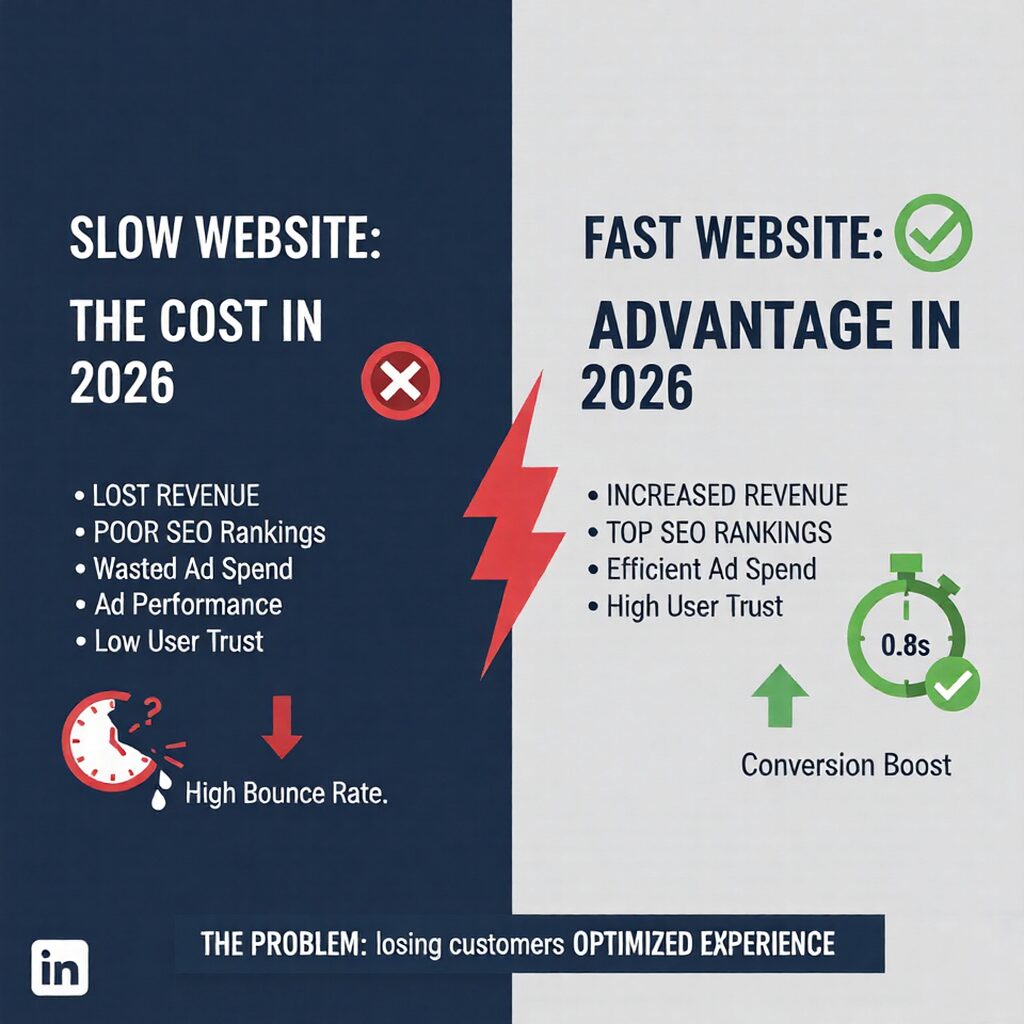
Why Website Speed Is a Growth Engine in 2026

A fast website is no longer optional.
In 2026, website speed directly impacts revenue, SEO visibility, and user trust—especially for SaaS companies and digital businesses. Performance is no longer a backend concern. It is a business decision that affects how users, search engines, and AI systems perceive your brand.
Users are more impatient than ever. AI-driven search engines are more selective. Paid traffic is more expensive.
If your website is slow, you are not just losing visitors—you are losing qualified opportunities.
This article explains why website speed matters in 2026, how it affects conversions and AI-driven SEO, and what actually makes a website fast without sacrificing clarity or usability.
Why Website Speed Matters in 2026
Every visitor arrives on your website with expectations.
They expect pages to load instantly.
They expect smooth navigation.
They expect zero friction.
If your website takes more than a few seconds to load, most users leave before understanding what you offer. This behavior directly affects:
- Conversions
- SEO and AI visibility
- Ad performance
- Brand credibility
Speed is now part of your brand experience. A slow website feels unreliable. A fast website feels professional.
The Real Cost of a Slow Website
Many businesses underestimate how expensive slow performance really is.
A slow website leads to:
- Higher bounce rates
- Wasted paid traffic
- Lower AI and SEO rankings
- Reduced trust
You may still get traffic, but traffic without conversions has no value.
For SaaS businesses, this is especially risky. Users often compare multiple tools at once. The faster, smoother website almost always feels like the safer choice—even if the product itself is similar.
How Speed Affects Conversions
Website speed and conversions are directly connected.
Fast websites:
- Reduce friction
- Increase engagement
- Build confidence
- Encourage signups and demos
Slow websites introduce hesitation, and hesitation kills conversions.
This is why performance optimization often delivers higher ROI than redesigns or feature changes. Improving speed improves results without changing your offer.
Website Speed and AI-Driven SEO
Search engines no longer just index content. They evaluate experience.
AI-driven search systems prioritize websites that are:
- Fast
- Clear
- Easy to interact with
- Reliable
Website performance influences:
- Core Web Vitals
- User engagement signals
- Content accessibility
- Overall site quality
AI systems are trained to recommend solutions users will trust. Slow or unstable websites send negative signals, reducing the chance of being surfaced or recommended.
Performance Is Not About Fancy Design
A common misconception is that fast websites must look boring.
The opposite is true.
The most premium websites are usually the simplest.
Performance optimization is about removing unnecessary complexity, not personality. Common performance issues include:
- Heavy animations
- Large unoptimized images
- Bloated themes and plugins
- Excessive JavaScript
A visually impressive site that loads slowly feels broken. A clean, fast site feels trustworthy.
Clean Code and Optimized Assets Matter
Clean, well-structured code loads faster, scales better, and breaks less. While users don’t see the code, they feel its impact.
Optimized assets also play a major role:
- Compressed images
- Modern file formats
- Lazy loading
- Fewer unused fonts
These changes don’t affect design quality—they improve speed perception and usability.
Speed Is Also About Perception
Performance isn’t only measured in milliseconds.
A clear, focused user journey makes a website feel faster.
When users immediately understand:
- What you do
- Who it’s for
- What to do next
They move faster and trust your brand more. Clarity and speed work together.
Final Thoughts
Website speed is no longer a technical detail.
It is a growth advantage.
In 2026, performance affects how users trust your brand, how AI-driven platforms rank your site, and how efficiently you convert traffic into customers.
Fast websites:
- Build trust faster
- Convert better
- Waste less ad spend
- Scale more easily
If your website feels slow, fixing performance may be the highest-impact improvement you can make this year.
Because in an AI-driven digital landscape, speed isn’t optional—it’s essential now.